That sinking feeling—realizing something important is happening and you may not be prepared—is familiar to many people thinking about the future of our planet. As the impacts of climate change and environmental degradation become harder to ignore, more people are asking the same question: what can I do about it?
One answer is building the skills needed to turn concern into action—and for many professionals, that path runs through sustainability-focused business education.
Key Takeaways
In short? An MBA in Sustainability opens doors that combine business expertise with environmental and social impact, with some added benefits:
- Growing demand: Sustainability-focused roles have grown significantly, with renewable energy, supply chains and circular value chain management among the fastest-growing career paths.
- Competitive salaries: Sustainability MBA graduates typically earn $75,000-$120,000+, depending on role, experience, and industry.
- Diverse career paths: Bard graduates work in operational sustainability (Etsy), sales and business development (L'Oréal), financial services (ING), consulting, and entrepreneurship.
- Skills that matter: Bard's MBA integrates conventional business skills with sustainability principles, teaching finance, strategy, leadership, and data analytics through a sustainability lens.
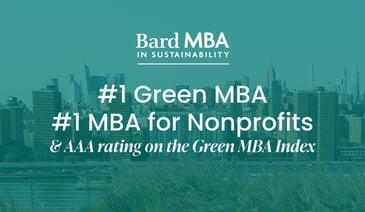
- Award-winning program: Bard's MBA in Sustainability is ranked #1 Best Green MBA, #1 MBA for Impact in the World, and #1 MBA for Nonprofits.

Awareness of environmental and social challenges is growing rapidly—but awareness alone doesn't solve problems. The next step is figuring out how to turn that concern into meaningful work.
That's where turning your environmental activism into a career starts to make sense and the benefit of a sustainability degree becomes clear.
The world doesn't need more managers—we need more sustainability leaders. The future calls for leaders who cherish social innovation; who embrace sustainable development as a part of their fundamental rationale for leading a business in the first place; who see the potential for business to address climate change and feed the world and lift billions out of poverty.
Bard offers an MBA in Sustainability because we believe that tomorrow's leaders need to learn how to be more sustainable. They need to be equipped with the tools, action-oriented inspiration, and business savvy necessary to tackle some of the most complex issues we have ever faced as a human society.
But—really—what can you do with a degree in sustainability? Read on to find out.
Business in the sustainability field
The definition of sustainability has been argued over for a number of decades, but many sources can agree on this essential idea: sustainable actions improve people's quality of life while protecting and restoring the natural ecosystems and resources on which human well-being depends.
Sustainability career growth and salaries
Sustainability careers are no longer niche—they're becoming essential across industries. According to LinkedIn's 2025 Global Green Skills Report, demand for workers with green skills continues to outpace supply, with green hiring growing nearly twice as fast as the share of workers who possess those skills (7.7% vs. 4.3%). At the same time, sustainability expertise is spreading beyond traditional environmental roles: more than half of green hires now work in non-green job titles, reflecting how climate and sustainability considerations are becoming embedded across sectors—from energy and utilities to technology, finance, and supply chains.
As demand grows, so do the opportunities. Corporate sustainability managers can earn between $75,000 and $120,000, with senior roles and specialized positions commanding even higher salaries. Whether you're interested in consulting, corporate strategy, social entrepreneurship, or renewable energy, an MBA in Sustainability opens doors to careers that combine financial success with meaningful impact.
The difference a sustainable MBA makes
Bard's MBA in Sustainability starts with the evidence that shows that businesses can practice sustainability and not only emerge successful but be more profitable than their non-sustainable peers. Students learn how industries are developing strategies that solve environmental and social problems while creating long-term economic value.
Many prospective business students aren't sure how to choose an MBA program. These days, many business schools offer courses or tracks in sustainability where, like at Bard, students learn to combine a company's financial goals with its mission-oriented ones. That's an important shift, reflecting the growing demand for green skills across the workforce. But sustainability challenges rarely sit neatly in a single department. They affect finance, operations, supply chains, strategy, and leadership.
That's why Bard's MBA takes a different approach. Instead of treating sustainability as a specialization, it's integrated across the entire curriculum—from finance and strategy to marketing and leadership—preparing graduates to lead organizations where sustainability is embedded in how business gets done.
Just as important are the leadership and collaboration skills needed to drive change inside organizations. Sustainability challenges are complex, and meaningful progress requires the ability to influence teams, build partnerships, and guide organizations through transformation.
Students develop these capabilities through courses and hands-on experiences such as:
- NYCLab—a yearlong sustainability consulting course where students work with clients like Etsy, Unilever, Eileen Fisher, HSBC, and more to support their sustainability goals
- Personal Leadership Development
- Leading Change in Organizations
- Building a Sustainable Organization
- Sustaining Mission
That preparation translates into real career outcomes: Bard MBA alumni report an average salary increase of $34,000 within two years of graduating, while the vast majority say their work contributes to environmental or social impact.
93% of Bard graduate respondents say their work contributes to environmental quality or social justice at least some of the time.
Environmental sustainability careers
As new and nontraditional as a sustainability MBA seems, many careers today require people to possess the knowledge to transform daily routines in a way that creates extensive advantages socially, economically, and environmentally. There are myriad types of jobs in sustainability. To illustrate that, here is a snapshot of some of our alumni's post-graduate pursuits and their careers in sustainability:
Sustainability Careers Bard Alumni Pursue
- Operational Sustainability at Etsy: Etsy is an online platform that empowers entrepreneurship for the everyday craftsman, or artist. Consumers go to Etsy for original, authentic, and handmade pieces—ranging from jewelry to paintings, to furniture, and beyond. Why would a site like this hire someone with a background in sustainability? Innovation, that's why. In fact, a major asset of sustainability is its focus on economics and the power to innovate.
- Sustainability Consulting at BSR: Organizations like BSR (Business for Social Responsibility) advise global companies on sustainability strategy, climate action, and responsible supply chains. Consultants work with businesses across industries to translate sustainability commitments into concrete operational and strategic changes. This type of role requires both analytical and business skills: understanding markets, evaluating risks and opportunities, and helping companies integrate sustainability into decision-making. Nearly 40% of Bard MBA alum are in consulting careers.
- Circular Economy & Resource Management at Waste Management: Companies focused on waste and resource management are also key players in the sustainability economy. At organizations like Waste Management, sustainability professionals work on recycling systems, circular economy initiatives, and strategies to reduce landfill waste while recovering valuable materials. The entire Waste Management sustainability team earned their MBA from Bard. These roles sit at the intersection of operations, policy, and environmental science—helping cities and businesses rethink how materials are used, recovered, and reused.
- Head of Operational Excellence at ING Financial Services: ING, a financial services firm, believes all sustainable progress is driven by people with the imagination and determination to improve their future and the futures of those around them. So, they promote impact investing, which works to empower people and organizations to realize their own vision for a better future–however modest or grand. Our purpose, therefore, is to empower people to stay a step ahead in life and in business.
These examples highlight how sustainability careers are emerging across industries. Whether improving operations, advising companies on strategy, or redesigning systems for a circular economy, sustainability professionals are helping organizations respond to climate risks while identifying new opportunities for innovation and growth.
Frequently Asked Questions about earning an MBA in Sustainability
Sustainability careers will be the only careers of the future. Future-thinking students who earn an MBA in Sustainability early in the development of the industry will position themselves to be at the forefront of a massive shift in how we do business.
So, here's your wake-up call—and please don't hit the snooze button: the health of our communities, our economies, and our environment depends on the people who choose to act now.
The world needs leaders who understand both business and sustainability—and how to bring the two together.
Are you ready to help lead the change?
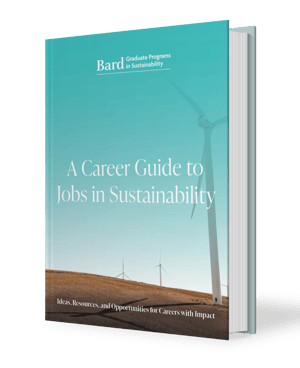
Download our Career Guide to Jobs in Sustainability:
Ideas, Resources, and Opportunities for Careers with Impact