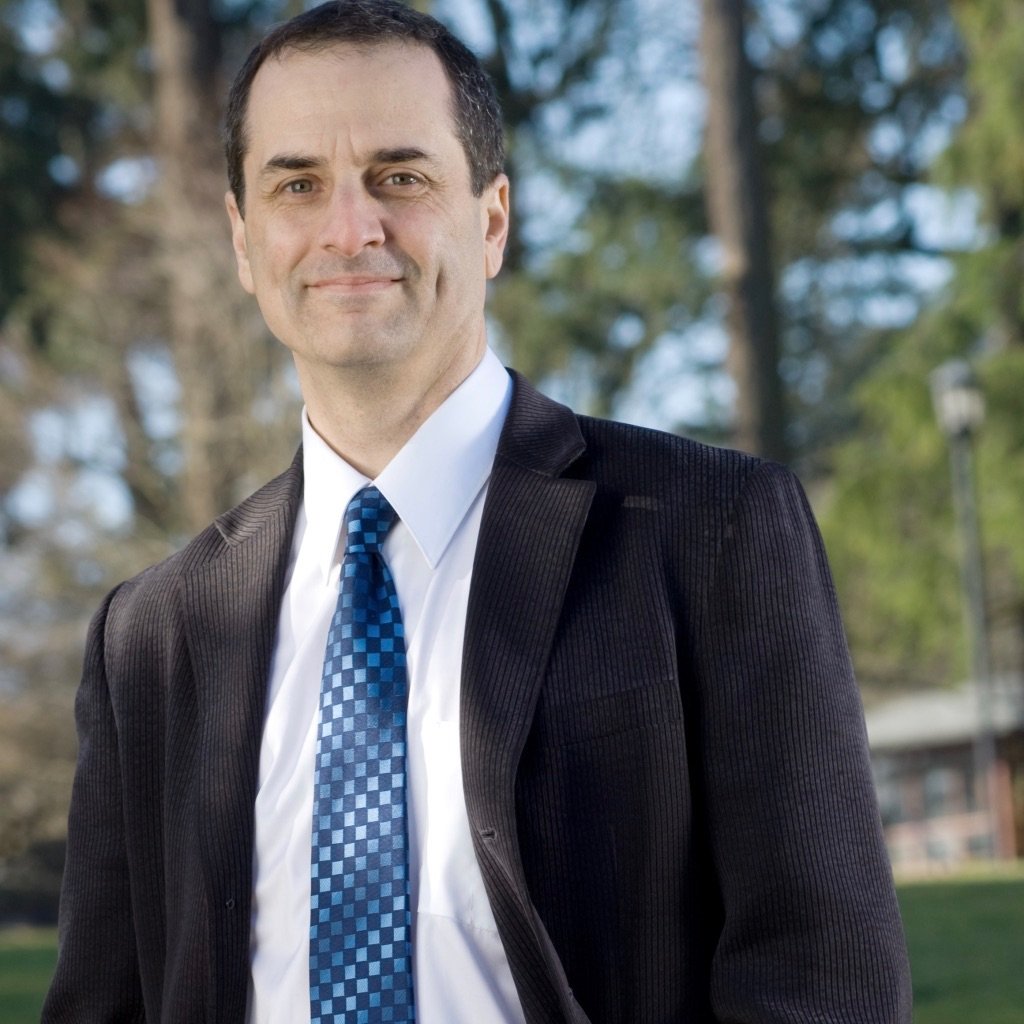
Dr. John Mischler Joins Bard Center for Environmental Policy as Environmental Sciences Faculty and Assistant Director

The Bard Center for Environmental Policy (CEP) is pleased to welcome Dr. John Mischler as Environmental Science Faculty and Assistant Director beginning in Fall 2026.
An applied biogeochemist, educator, and sustainability leader, Mischler brings extensive experience in agroecology, environmental health, food systems, and experiential education. His interdisciplinary research and commitment to hands-on learning will further strengthen Bard's graduate programs in Environmental Policy, Climate Science and Policy, and Environmental Education.
Mischler earned his Ph.D. in Ecology from the University of Colorado Boulder, where his research included reconstructing past atmospheric conditions through methane isotope analysis from Antarctic ice cores. He also holds an M.S. in Geosciences from Penn State University and a B.A. from Augustana College.
Throughout his career, Mischler has investigated the connections between agriculture, ecosystems, and human well-being across diverse environments around the world. His research has explored topics including:
- Agricultural sedimentation impacts on Lake Tanganyika in East Africa
- Methane isotope analysis from Antarctic ice cores to investigate long-term agricultural influences on the global methane cycle
- Nutrient pollution from agricultural systems and its effects on freshwater ecosystems
- The relationship between land use, aquatic ecosystems, and the spread of schistosomiasis
- Forest fragmentation and the distribution of tick-borne disease
- Soil health, microbial dynamics, and rangeland restoration in both the Kenyan savanna and Midwestern tallgrass prairies
Learning Through Place-Based Education
Before joining Bard, Mischler served as Associate Professor of Sustainability and Environmental Education and Environmental Science at Goshen College, while also directing the Merry Lea Teaching Farm, a living laboratory where students learned through immersive, place-based agroecological education. There, he helped lead Goshen's Master of Arts in Environmental Education program, oversaw graduate capstone projects, and developed transdisciplinary sustainability curricula centered on the Food-Energy-Water Nexus.
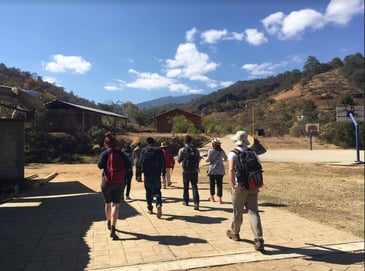
His commitment to experiential learning extends well beyond the classroom. Mischler has led study abroad programs in Zambia and Indonesia, where he completed a Fulbright Fellowship examining farm-based education and agroforestry practices. He has also partnered with refugee farming communities, contributed to statewide food access initiatives, collaborated on air quality monitoring projects in underserved communities, and served on local food policy councils.
For Mischler, agriculture provides one of the most powerful settings for environmental education because it naturally connects scientific disciplines with everyday life. As he explains, "So many relevant subject areas intersect across the farm landscape—nutrient cycling, botany, entomology, soil science, parasitology, water rights, water quality, environmental justice, sociology—just to name a few." He believes that because "everyone has a personal connection to food," agriculture is "immediately accessible to any student" and helps cultivate a deeper understanding of how environmental systems are interconnected.
Bringing Interdisciplinary Leadership to Bard
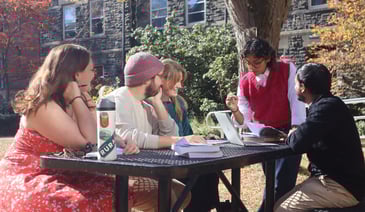
At Bard, Mischler teaches the year-long Environmental Science sequence, advises graduate capstone projects, mentors M.Ed. students, and provides administrative and curricular leadership across the Center for Environmental Policy. As a first-generation college graduate, he is committed to helping students navigate higher education while fostering belonging and integrating participatory environmental justice into teaching and practice.
Dr. Eban Goodstein, Director of the Bard Graduate Programs in Sustainability, is excited to welcome Mischler to the faculty. "John combines a student-centered, experiential approach to graduate education with a deep background in frontier bio-geo sciences," Goodstein said. "He is really well equipped to support students through Bard's unique approach to a professional master's grounded in rigorous academic training, combined with the second-year high-level professional internship and thesis."
About the Bard Center for Environmental Policy
The Bard Center for Environmental Policy prepares the next generation of environmental leaders through interdisciplinary education grounded in science, policy, education, and practice. Students combine rigorous coursework with professional internships, applied research, and close faculty mentorship, building the knowledge and experience needed to tackle complex environmental challenges and lead meaningful change.
Explore Bard's graduate programs in Environmental Policy, Climate Science and Policy, and Environmental Education to learn more.