Where do your ingredients come from? How can you make your packaging more sustainable? And how do you build a business that reflects your values while continuing to grow?
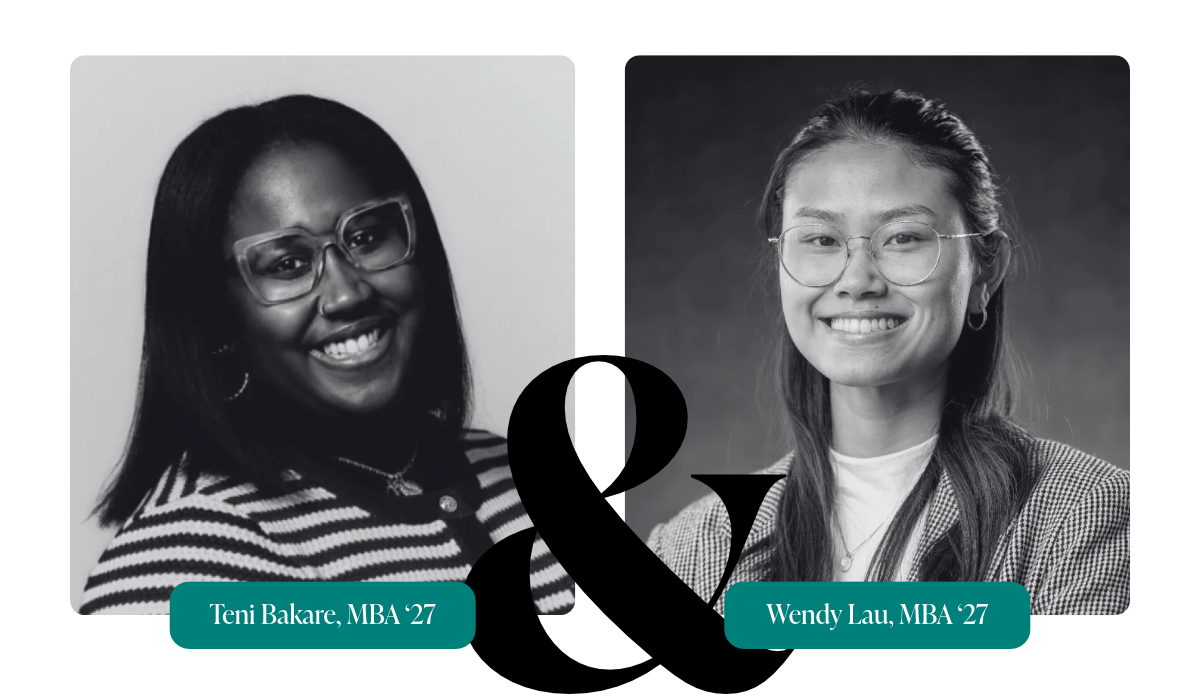
These are some of the questions that Teni Bakare, MBA ’27, and Wendy Lau, MBA ’27, are helping a small, Black woman-owned business answer through their year-long capstone project at the Bard MBA in Sustainability.
Pecandy is an Ohio-based company founded by Alicia and Kiana, who turned their passion for delicious, uniquely flavored candied pecans into a business focused on bringing joy to customers. Now, they're exploring how to make sustainability a more intentional part of their operations and brand.
For Teni and Wendy, it's an opportunity to help a growing business make meaningful decisions while gaining hands-on experience in sustainable supply chain management, business strategy, marketing, and packaging.
Building a Sustainability Strategy from the Ground Up
Rather than approaching sustainability as a standalone initiative, Teni and Wendy are helping Pecandy consider how environmental and social responsibility can become part of its core business strategy.
Their capstone project spans two semesters, with three interconnected areas of focus:
- Ethical and sustainable sourcing: In the first semester, Teni and Wendy are working together to develop a framework to help Pecandy identify a primary pecan grove that aligns with the company's environmental, social, and business values.
- Sustainable packaging: Throughout the year, Wendy will also evaluate packaging alternatives that could reduce the environmental impact of Pecandy's products.
- Sustainability marketing: During the second semester, Teni will develop a marketing campaign that communicates the company's sustainability commitments and connects them to its brand identity.
The students are beginning with sourcing, recognizing that decisions about suppliers will influence the company's broader sustainability strategy.
But before identifying potential pecan growers, they need to answer a more fundamental question: What does sustainability mean to Pecandy?
As Wendy explains, “I'm personally very excited to help them think through the why of sustainability and help them to incorporate that into their brand.” For Wendy, that means helping Pecandy understand how sustainability can strengthen the business over time, from building relationships with customers to connecting with suppliers who share its values.
What Does Ethical Sourcing Look Like for a Small Business?
For companies that rely on agricultural products, responsible sourcing involves more than finding a supplier with the right product at the right price. It can also mean considering how ingredients are grown, how workers are treated, and whether suppliers share the company's values.
Teni and Wendy are developing a sourcing framework that begins with a strategy workshop to identify the environmental, human rights, and community values that should guide Pecandy's purchasing decisions. From there, they'll explore how the company can establish its own supplier expectations and identify growers that align with those priorities.
The history of pecan cultivation in the United States adds another dimension to the project. As a Black woman-owned company sourcing an agricultural product with deep roots in the American South, Pecandy has an opportunity to consider how its sourcing relationships reflect its identity and commitments.
The goal isn't simply to identify a supplier. It's to create a practical framework that Pecandy can use to make responsible purchasing decisions as the company grows.
Connecting Sustainable Packaging and Marketing to Business Strategy
Once the sourcing framework is developed, Teni and Wendy will expand their work into two complementary areas during the spring semester.
Wendy will focus on sustainable packaging, drawing on her previous experience at TerraCycle, where she worked with clients on recycling programs. Through the capstone, she'll apply that knowledge to refine Pecandy’s packaging strategy and evaluate alternatives that better align with its environmental goals.
As Wendy explains, “I wanted to continue that through line, and also really be able to help incorporate that knowledge and put it further into a business who's looking to rethink their packaging strategy.”
Teni will focus on marketing, helping Pecandy communicate its sustainability commitments through a campaign that reflects its brand and values.
For Teni, who works in professional development at a law firm, the project offers an opportunity to explore two professional interests: supply chain management and marketing. "Marketing was a really fun class,” says Teni. “And I was excited to do the sourcing framework because of my previous interest in supply chains." She's particularly exploring how marketing strategies differ between small businesses and large corporations.
Together, Teni and Wendy’s work will help Pecandy connect its operational decisions to the story it tells customers, building a more cohesive approach to sustainability.
From the Classroom to Real-World Sustainability Consulting
One of the defining features of the Bard MBA in Sustainability is its emphasis on experiential learning. Students don't just study sustainable business models; they work with organizations to understand challenges, develop strategies, and explore practical solutions.
For Teni and Wendy, their capstone brings together knowledge from several MBA courses, including sustainable business strategy, circular value chains, supply chain management, and marketing.
Wendy sees the capstone as an opportunity to move beyond classroom exercises and apply what she's learned to a real business, saying that "we wanted to really get the tangible learning out of doing it for a company and actually implementing that."
Their partnership with Pecandy also grew out of another experiential learning opportunity: NYCLab, the Bard MBA's year-long sustainability consulting course.
Although Pecandy wasn't selected as an NYCLab project, both students had ranked the company among the organizations they were interested in working with. They approached the program about continuing the relationship through their capstone instead, demonstrating how NYCLab connections can lead to additional consulting opportunities.
Teni and Wendy had also worked together on an NYCLab project for Pixelframe, a company developing reusable modular concrete products. That experience helped them build skills in client communication, project management, teamwork, and strategic thinking that they're now bringing to Pecandy.
Throughout their capstone, they're drawing on the expertise of Janice Lao, their capstone advisor and former strategy professor, who brings experience in supply chain management. For the spring semester, Teni is also working with marketing professor Lauren Kiel, while Wendy is connecting with several Bard alumni, including Alexis Maciejunes, MBA ‘24, for additional support with her packaging strategy.
For Teni, having access to faculty with different areas of professional expertise is a valuable part of the experience. She explains that, "it's really great being in a program where you have a lot of people that have a lot of expertise in different areas."
Building a More Sustainable Business, One Decision at a Time
The partnership with Pecandy is a powerful example of what the Bard MBA capstone is designed to do: connect sustainability education with real-world challenges and give students the opportunity to put their knowledge into practice.
For Pecandy, the partnership offers an opportunity to build a stronger foundation for sustainable business growth. For Teni and Wendy, it's a chance to deepen their expertise, explore their professional interests, and make a meaningful impact through their work.
Interested in hands-on sustainability consulting experience? Explore the Bard MBA in Sustainability and learn how students work with organizations to address environmental, social, and business challenges.

*Editor’s note: Portions of this article were drafted with the assistance of AI technology and reviewed for accuracy and clarity by Bard College staff.